
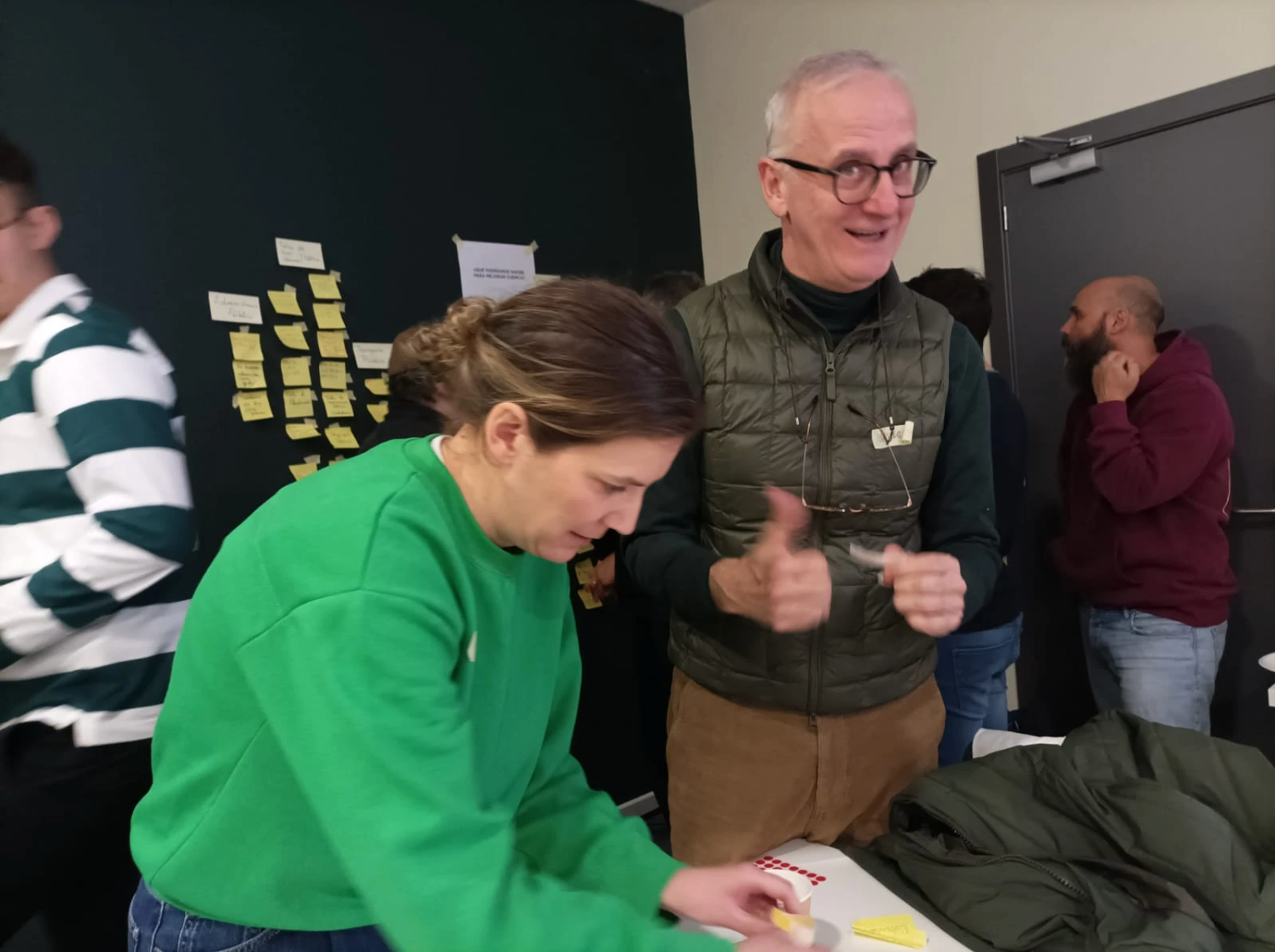
A workshop in which citizens came together to carry out a participatory session with a work methodology that allowed us to detect problems and needs of the city of Cuenca in order to find possible solutions. To do this, Javier Marquina, Alejandra Gutierrez Faus and the writer played the role of "facilitators" in this workshop, helping citizens in a process adapted from Design Thinking.
Building Solutions Together: Participatory Workshop in Cuenca
Citizen participation is the engine of real change in our cities. We recently had the opportunity to facilitate a workshop where citizens became protagonists, working collaboratively to identify the challenges facing Cuenca and propose innovative solutions.
Citizen participation is the engine of real change in our cities. We recently had the opportunity to facilitate a workshop where citizens became protagonists, working collaboratively to identify the challenges facing Cuenca and propose innovative solutions.
A Space for Citizens
This gathering brought together neighbors with a common goal: to diagnose the real needs of our city and explore viable alternatives to improve everyone's quality of life. It wasn't just another complaint session, but a true exercise in collective construction.
This gathering brought together neighbors with a common goal: to diagnose the real needs of our city and explore viable alternatives to improve everyone's quality of life. It wasn't just another complaint session, but a true exercise in collective construction.
Methodology: Adapted Design Thinking
To guide this process, we used a methodology inspired by Design Thinking, specifically adapted for the context of Cuenca. This approach allowed us to:
Identify real problems from the citizen experience
Understand the deep needs behind each challenge
Generate creative ideas collaboratively
Evaluate the feasibility of proposed solutions
Understand the deep needs behind each challenge
Generate creative ideas collaboratively
Evaluate the feasibility of proposed solutions
The Role of Facilitation
Javier Marquina, Alejandra Gutiérrez Faus and I acted as facilitators during the session. Our role was not to direct or impose, but to create the space and appropriate conditions for ideas to flow freely, ensuring that all voices were heard and that the process remained focused and productive.
Javier Marquina, Alejandra Gutiérrez Faus and I acted as facilitators during the session. Our role was not to direct or impose, but to create the space and appropriate conditions for ideas to flow freely, ensuring that all voices were heard and that the process remained focused and productive.
More than a Workshop: A Model of Participation
This experience demonstrates that when appropriate spaces are facilitated and effective methodologies are used, citizens have much to contribute. The problems of our cities are complex, but solutions can emerge from collective knowledge and the experience of those who live them day to day.
Initiatives like this are fundamental to building a more participatory city, where decisions are not made only from the top down, but integrate the perspective and real needs of those who inhabit Cuenca.
Citizen participation is not just a right, it is a powerful tool for urban transformation.